Saryu Riverfront
Narrative Design
Translating epic into image
Conceptualising the wall narratives through research, storyboarding, and visual interpretation.


An epic, carved across a riverfront
The Ramayana unfolds across more than 200 stone panels, each measuring 3 × 3 metres. Together, they form an expansive visual retelling of one of India's most enduring epics, translating its stories into a monumental architectural experience.
Returning to
the source
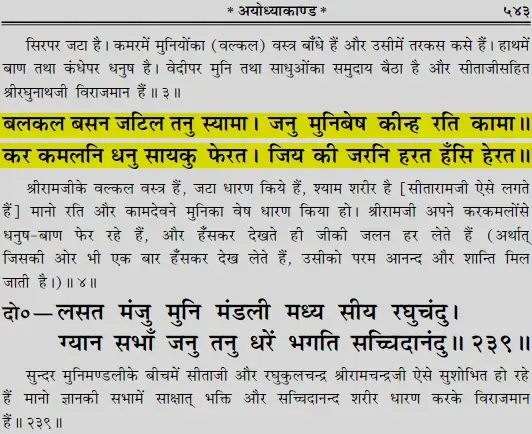
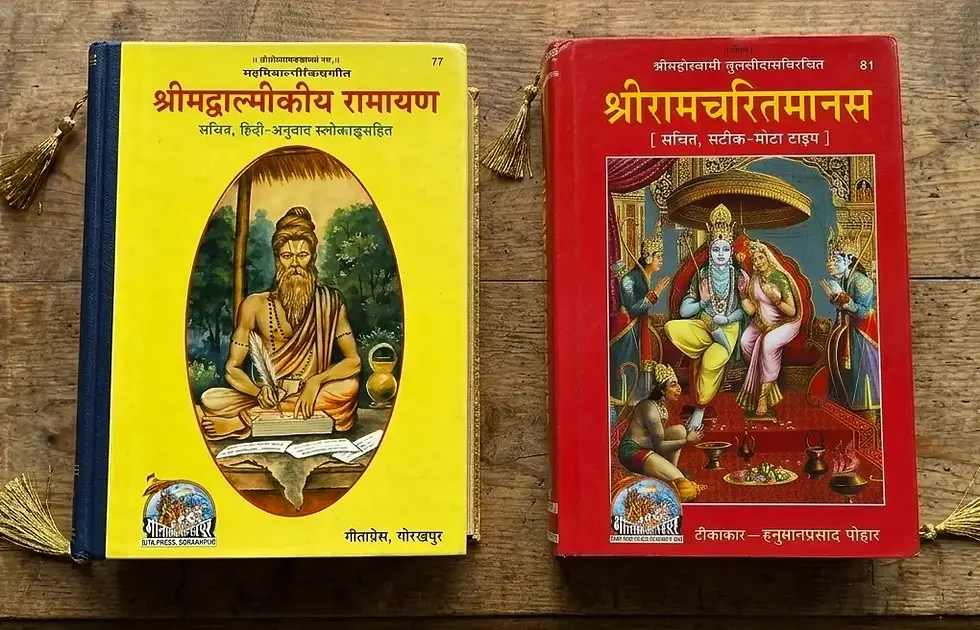
Research across Ramayana textual traditions informed the selection of episodes, verses, and narrative details, connecting the written epic with its visual interpretation.
One story,
More than 200 panels
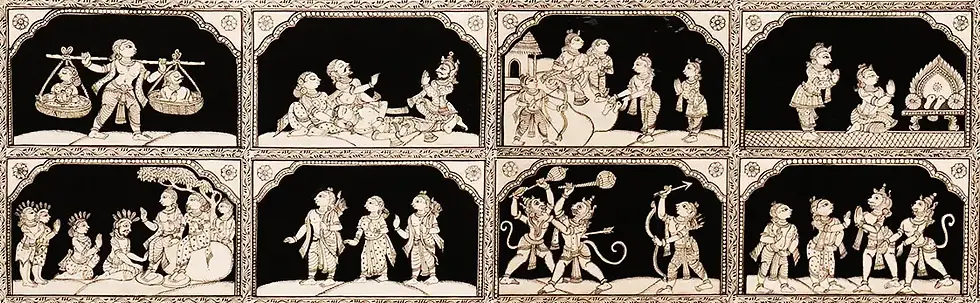
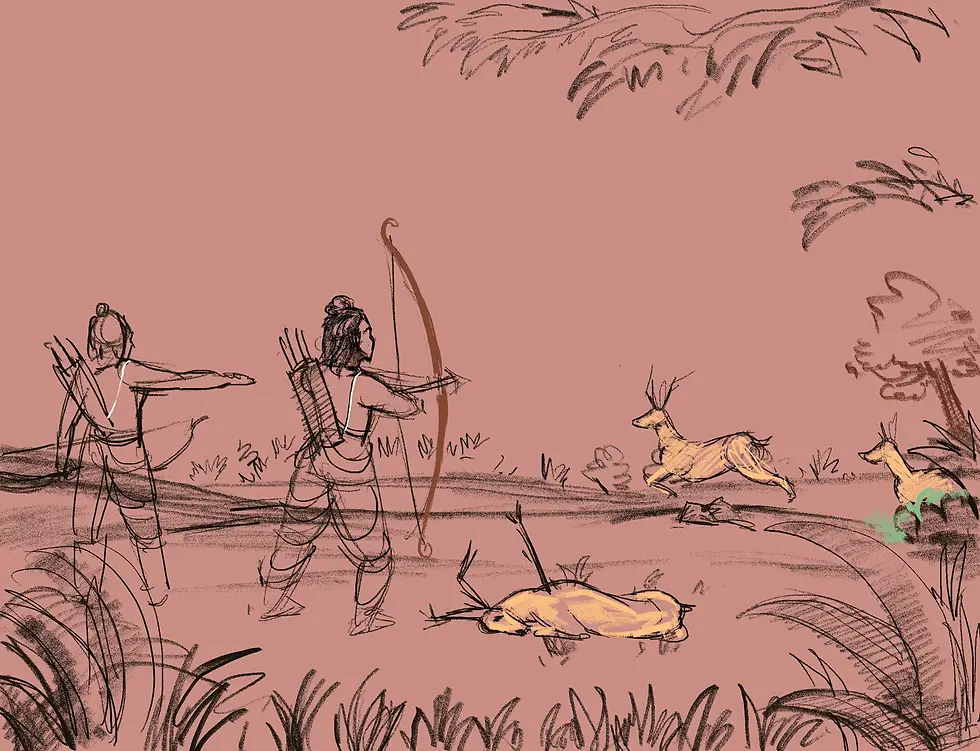
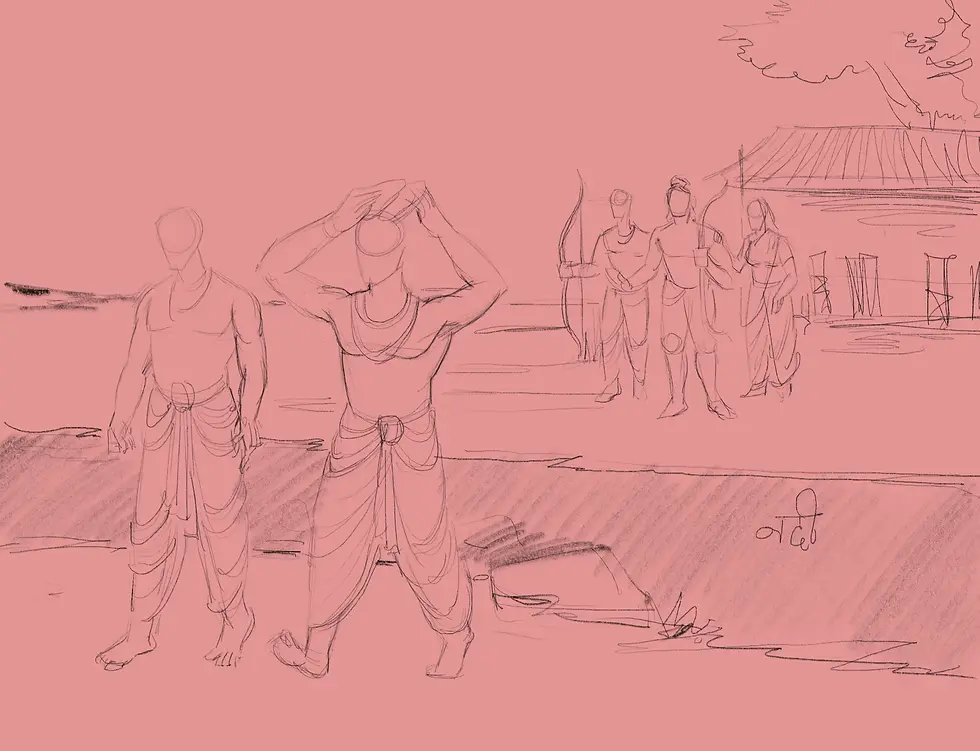
Rough sketches explored how individual scenes, characters, and compositions could communicate distinct moments while contributing to the larger narrative.



Giving the epic
a visual sequence
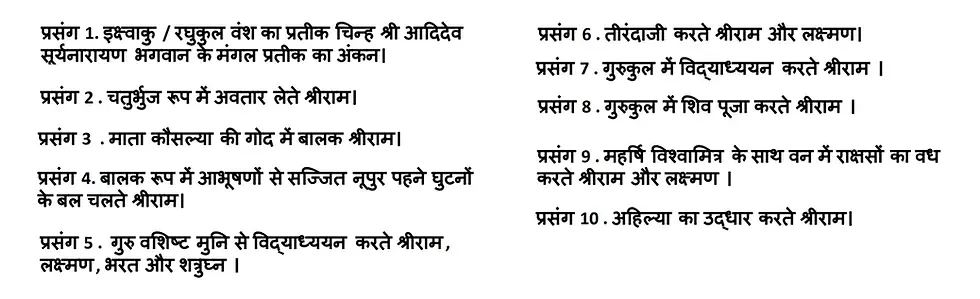
Storyboards helped translate research and early ideas into a sequence of visual narratives. Each panel represented a part of the larger story, requiring attention to the relationship between individual scenes and the overall progression of the Ramayana.


The written word meets the carved image
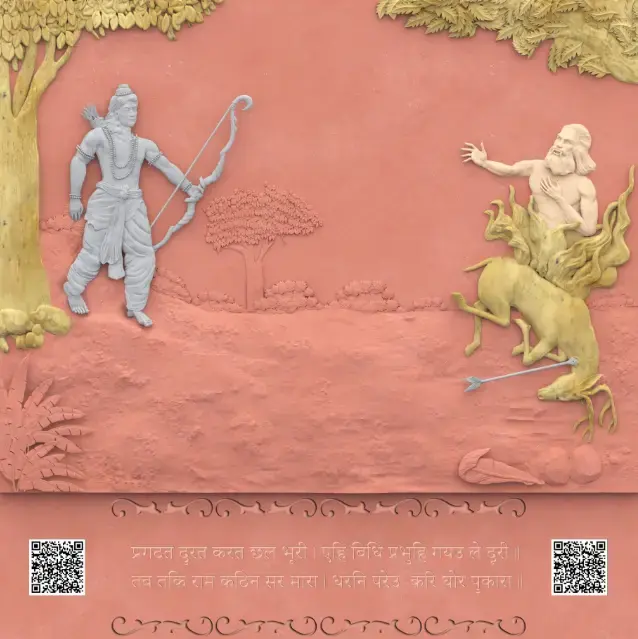
Quotations drawn from the epic were considered alongside the visual compositions, bringing written narrative and imagery together across the architectural surfaces.

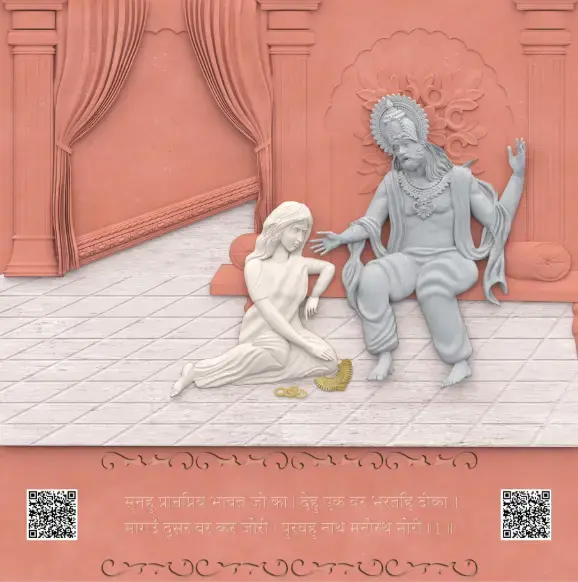
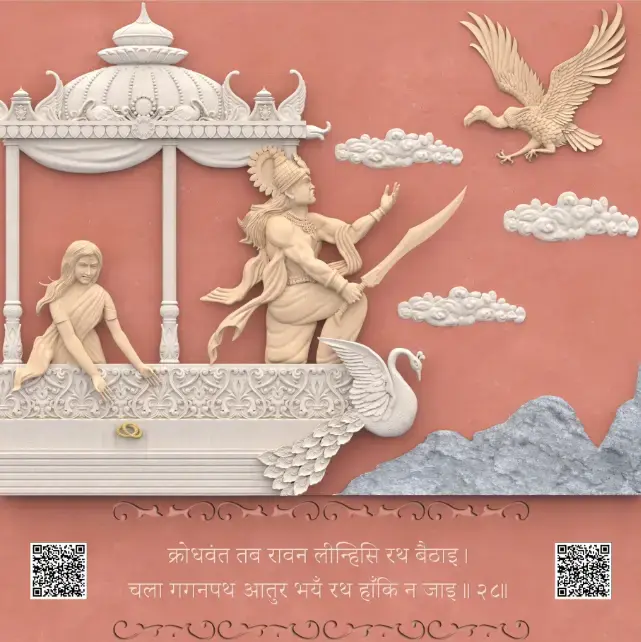


From sketch to stone
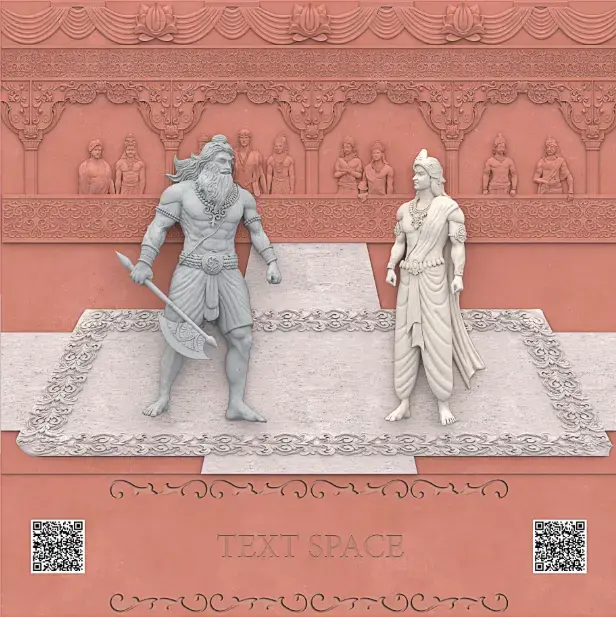
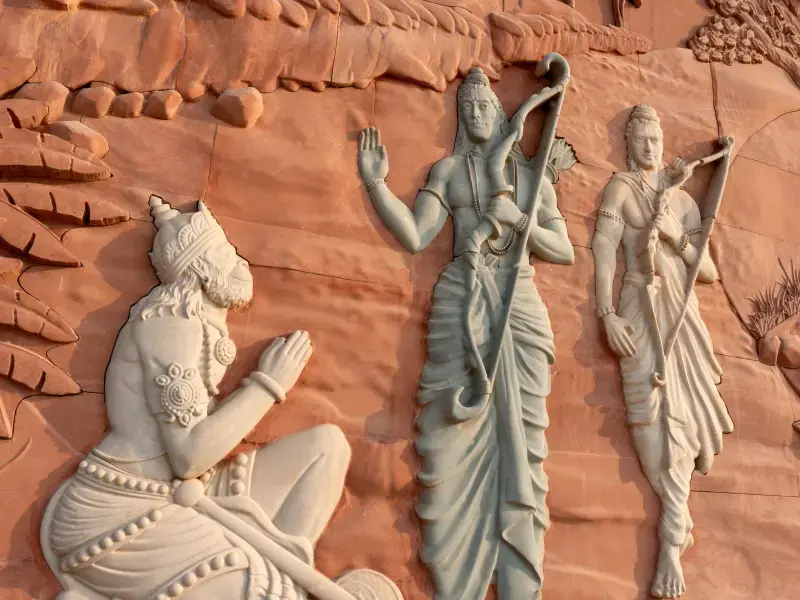
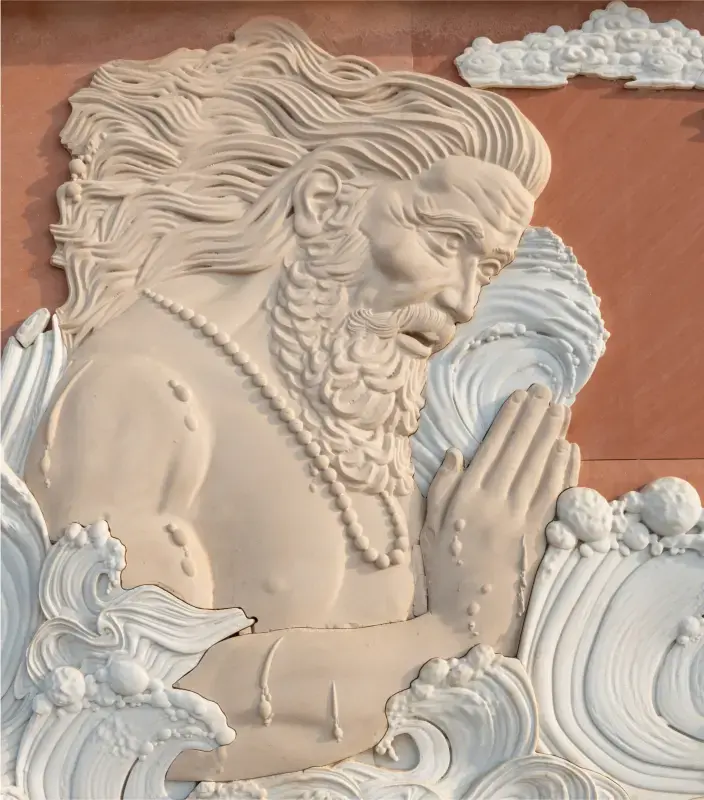
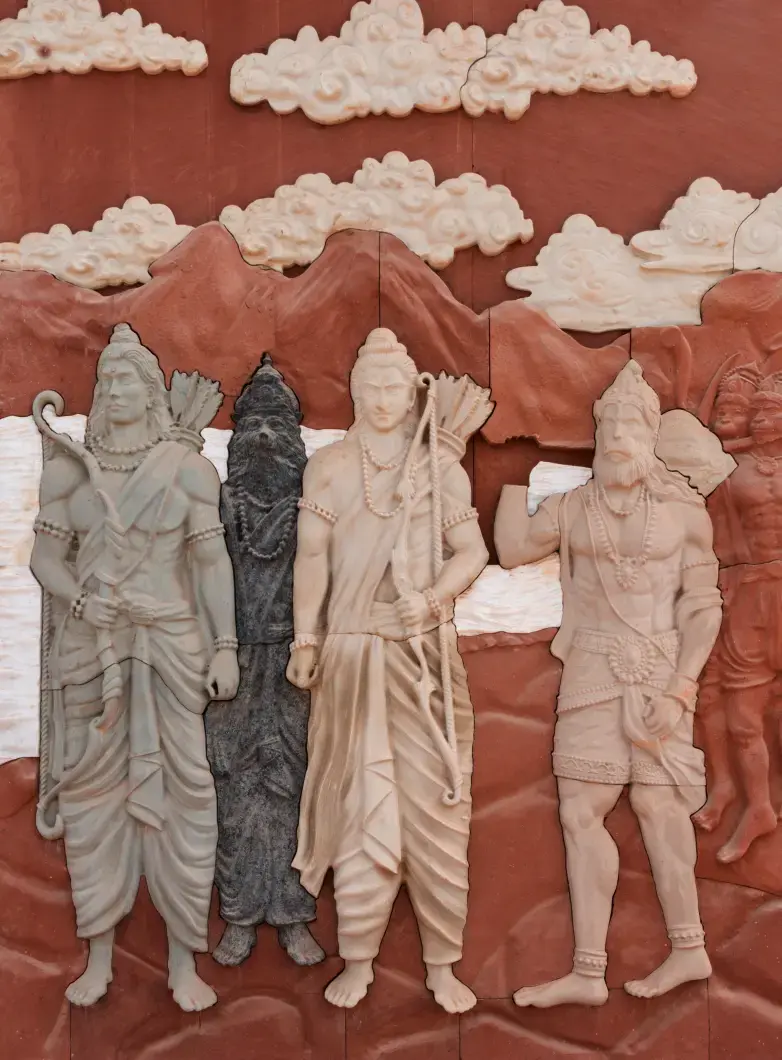
Photographs from the executed site in Ayodhya capture the transition from research, sketches, and storyboards to monumental stonework. The panels bring the Ramayana into the physical landscape, allowing the narrative to be experienced beyond the page.
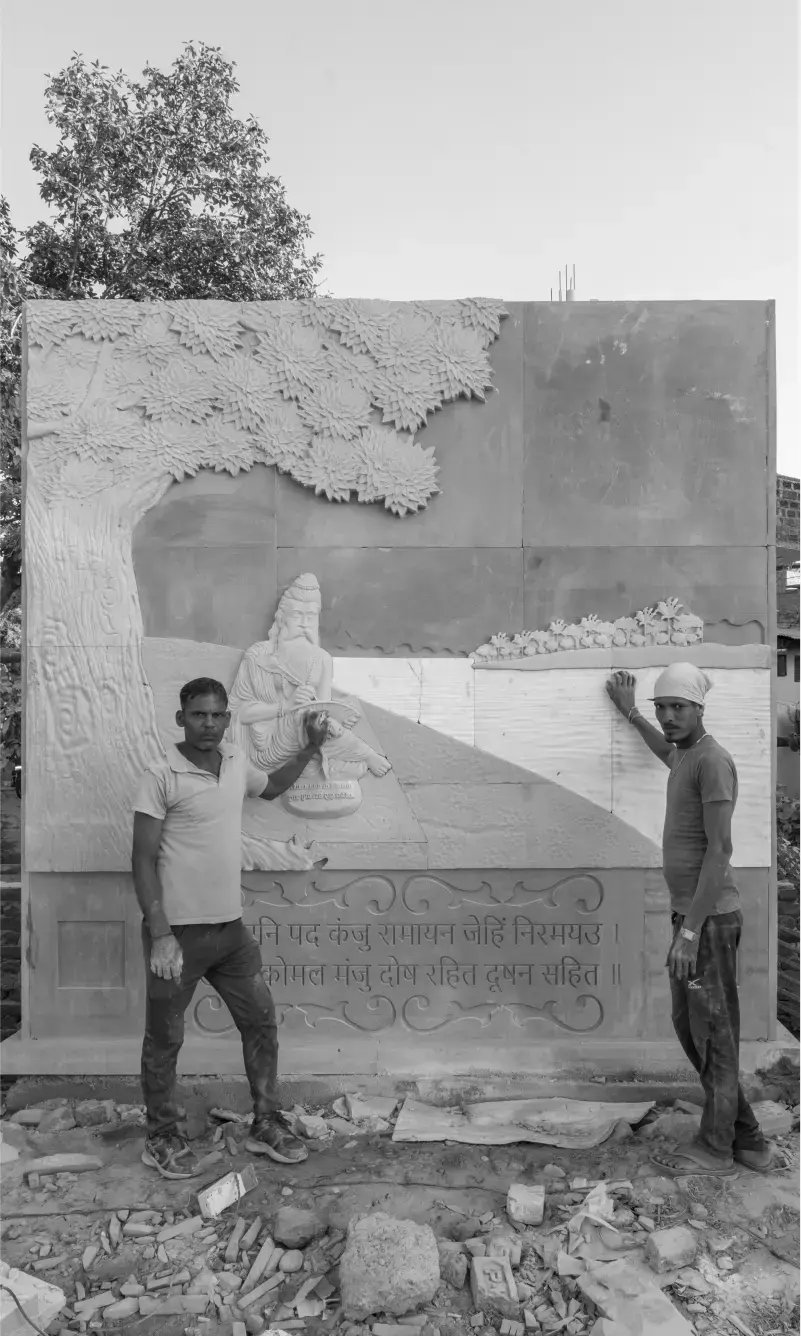
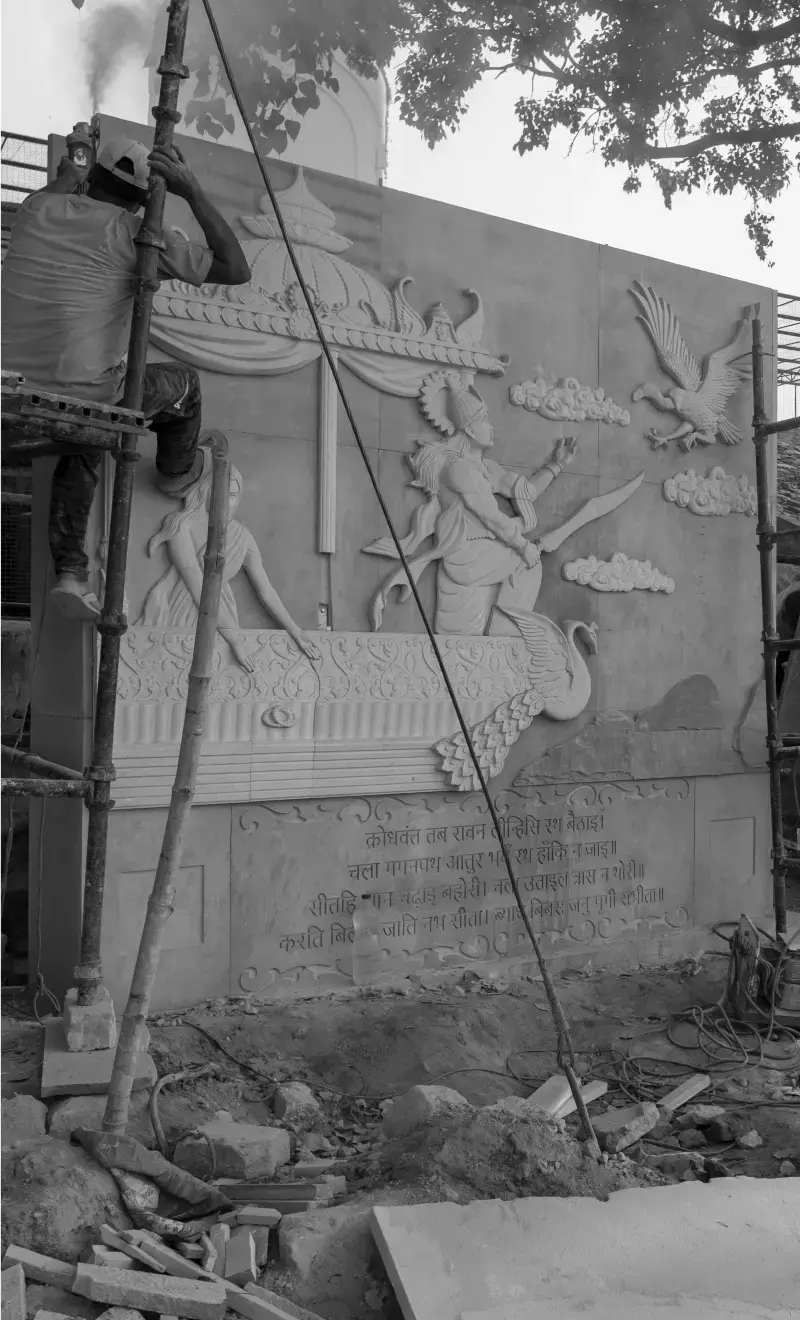




Beyond the narrative
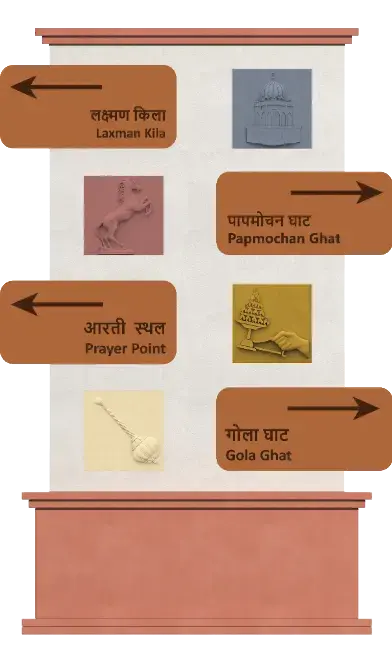
Alongside the riverfront wall narratives, I also worked on a series of site-specific signages, extending the visual language of the project into the surrounding public environment.


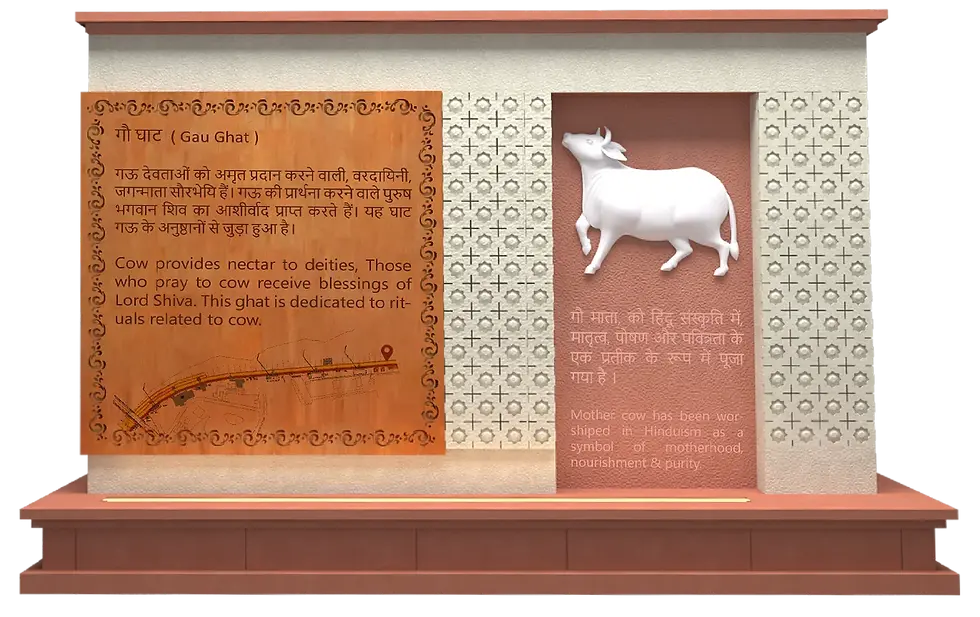

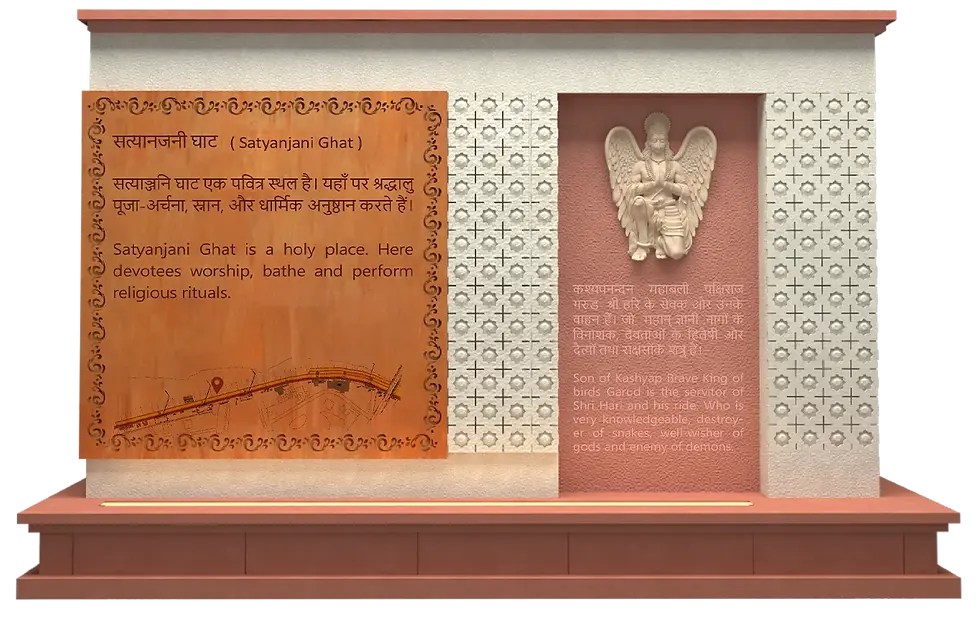
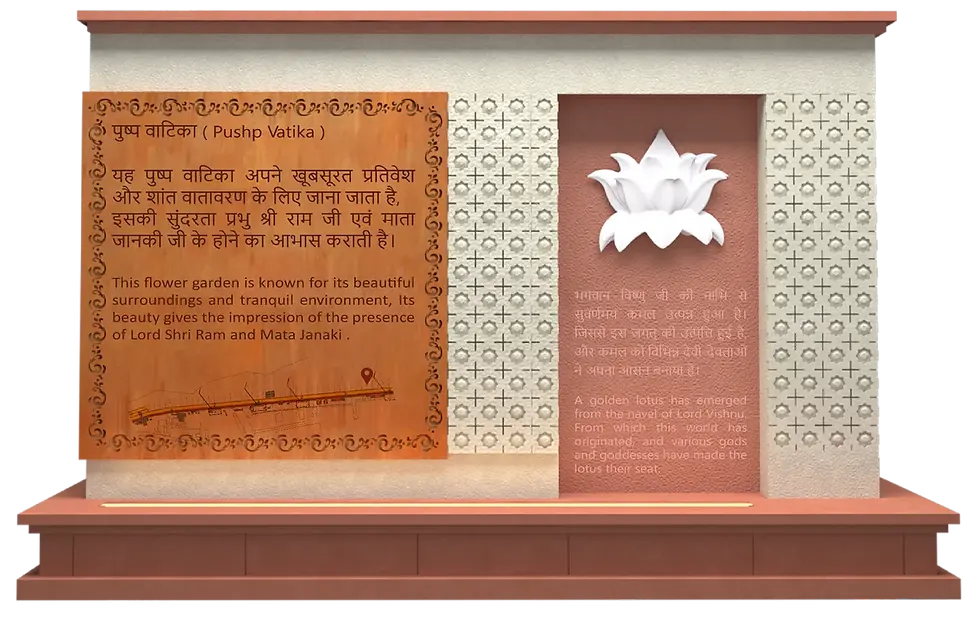
From research to public experience
My role involved conceptualising the wall narratives, researching Ramayana textual traditions, identifying quotations, and developing sketches and storyboards. Across more than 200 stone panels, each measuring 3 × 3 metres, these ideas became part of Ayodhya’s public landscape—where the visual narrative can be encountered and interpreted beyond the page.
Complete project execution, coordination, and on-site implementation by Odyssey Stone, Noida.